Home charging: questions answered
Times, plugs, chargers, the grant and the supply.
Free, no obligation. One registered electrician prices it, not five.
- 2.3 kW3-pin plug
- 7.4 kWhome charger
- 11 kWwith three-phase
- €300SEAI grant
Home charging, car by car
Each car's own times on a plug and a charger.
- Tesla Model Y9h 45m empty to full on 7 kW
- Tesla Model 39h 45m empty to full on 7 kW
- Volkswagen ID.48h 30m empty to full on 7 kW
- Toyota bZ4X8h 45m empty to full on 7 kW
- Skoda Elroq9h 30m empty to full on 7 kW
- Kia EV312h 30m empty to full on 7 kW
- Hyundai Kona Electric10h 30m empty to full on 7 kW
- Renault 58h 30m empty to full on 7 kW
- Nissan Leaf7h empty to full on 7 kW
How long will your car take at home?
Four quick taps. You see the hours a night on a 3-pin plug and on a 7 kW charger, and whether the cheap hours are enough. Your number is only asked for at the end, if you want a price.
A Tesla Model Y doing up to 60 km a day: 1h 35m a night on a 7 kW charger, 4h 55m on a 3-pin plug.
How this is worked out
Each car's figures are its usable battery, its on-board charger and its real-world energy use, with its time from empty to full on a 3-pin plug (2.3 kW), on a 7 kW home charger (7.4 kW on a single-phase supply) and at 11 kW. The hours a night are your daily km divided by the km each hour of charging adds. Cold weather and short trips use more. It's a guide, not a promise.
EV Home Chargers guides & price breakdowns
Straight answers to what people ask most: itemised costs, specifications, planning or grants, and what to check before you book.
More guides & resources: Charging a Kia EV3 at home · Charging a Hyundai Kona Electric at home · Charging a Renault 5 at home · Charging a Nissan Leaf at home · All guides & calculator hub · Technical & trade glossary · Frequently asked questions · What charging costs · EV tariffs · Installers by county · Claiming the grant · No driveway?
Every question
How long does an electric car take to charge at home?
From empty, about 8h 30m to 12h 30m on a 7 kW charger for the cars on this site. Day to day, only the day's driving: 60 km in a Model Y takes about 1h 35m.
Can I use a 3-pin plug?
Yes, at about 2.3 kW. It suits short daily driving.
Why is my charger 7 kW and not 11?
Most Irish homes have a single-phase supply, and a home charger on single phase gives up to 7.4 kW, which is why people call it a 7 kW charger. Faster 11 or 22 kW charging needs a three-phase supply, which few homes have, and a car whose on-board charger takes it.
Is there a grant?
Up to €300 from SEAI towards a smart charger and its installation, for a home with off-street parking.
What does a home charger cost?
Fitted, a 7 kW smart charger typically costs €1,000 to €1,500 before the grant.
I have no driveway. What then?
The grant needs off-street parking. Charging without a driveway has the options.
Does cold weather change it?
Cars use more energy in cold weather, so each hour of charging takes you fewer km in winter.
Who gets my request?
One registered electrician who fits home chargers in your county. Not a list.
Do I need to own an electric car already to apply for the €300 SEAI charger grant?
No. Following the SEAI scheme rule update, any homeowner or long-term resident with dedicated off-street parking at a home with an MPRN can claim the €300 Home Charger Grant whether or not they currently own or lease an EV.
Why does my car only charge at 7 kW at home when public chargers are 50 kW or 150 kW?
Public rapid chargers use high-voltage Direct Current (DC) that bypasses the car's internal converter, whereas a residential single-phase Irish supply provides 230 V Alternating Current (AC) capped at 32 amps (7.4 kW). Because the car sits parked overnight for 8 to 10 hours, 7.4 kW easily delivers 250 to 400 km of range by morning.
Can I install an EV charger if I have an electric shower and an air-to-water heat pump?
Yes. Your Safe Electric electrician fits a small CT clamp sensor onto your main meter tails to enable dynamic load balancing. Whenever the electric shower or heat pump ramps up, the charger automatically reduces its current for a few minutes so your main ESB fuse is never overloaded.
What is the maximum cable run from my fuseboard to the driveway?
Most standard installation quotes include up to 10 or 15 metres of surface-clipped cable from the consumer unit or meter box. Longer runs out to a detached garage or down a long country driveway are completely feasible using heavier 10 mm² armoured SWA cable to prevent voltage drop.
Should I choose a tethered charger or an untethered socket unit?
A tethered unit with a built-in 5 m or 7.5 m cable is far handier on dark, wet Irish evenings because you never have to unpack a wet cable from the boot. An untethered socket looks slightly neater on a front wall and lets you swap in a longer cable if you change parking spots.
How long do I have to finish the installation after SEAI approves my application?
Once SEAI emails your Letter of Offer, you have 6 months to have a Registered Electrical Contractor install an approved smart charger, issue the Safe Electric completion certificate, and upload your paperwork for the €300 EFT payment.
EV Home Chargers across all 26 counties
Requests from all 26 counties go to one vetted local specialist who covers your county — from Dublin, Cork, Galway and Limerick to Kildare, Meath, Wicklow, Waterford and Donegal. Pick your county below for local prices, specifications and advice.
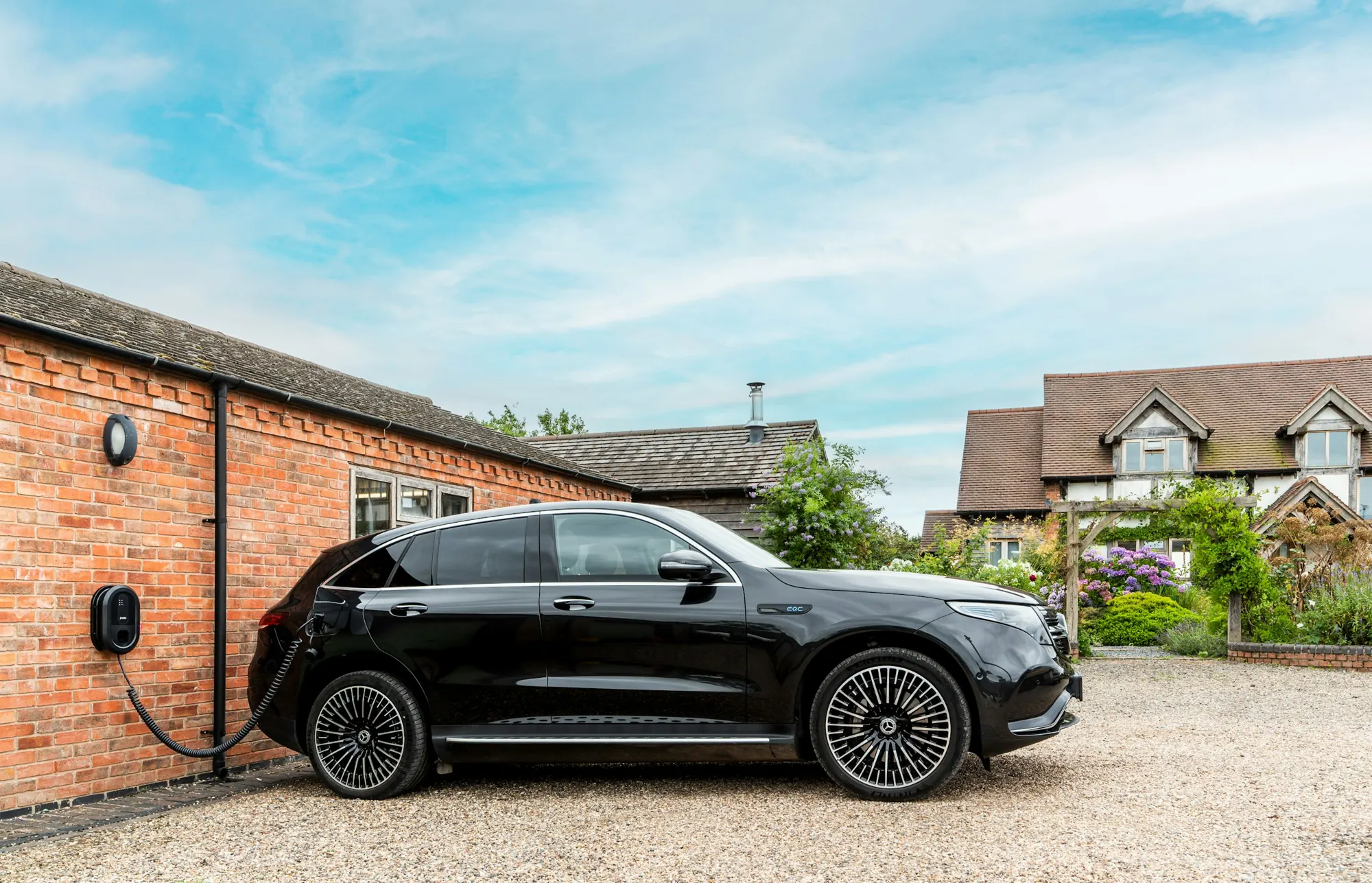
How long will yours take?
Four taps to the hours a night on a plug and on a charger. Then, if you want, one registered electrician who fits home chargers in your county rings with a price.